

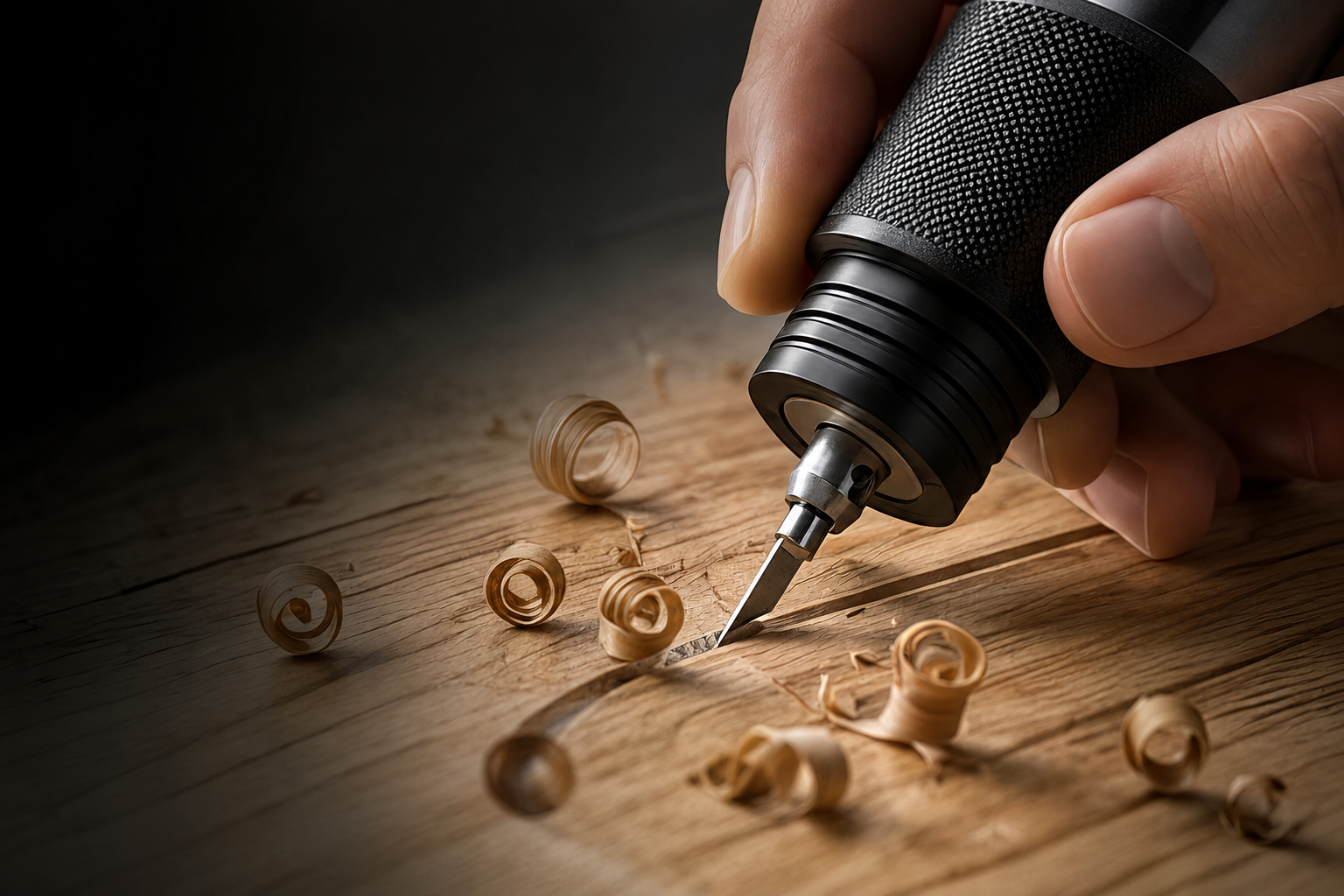
$1 Early Bird Reservation: Final Countdown
At the time of this update, the live SonicMax countdown showed 01 day, 17 hours, 49 minutes, and 57 seconds remaining.
The $1 Early Bird Reservation window ends when the live timer at the top of the SonicMax website reaches zero. Check the current countdown before you leave the page, because this article will remain online after the timer changes.
Short Answer
The SonicMax Slice 10 $1 Early Bird Reservation is for makers who want to stay close to the launch and secure early access before the reservation window closes. It is most relevant to people who regularly clean 3D prints, build models, shape EVA foam, work on cosplay props, or need more control than a conventional hobby knife provides in detailed cutting tasks.
The reservation is not a promise that one tool will replace every cutter, knife, file, or sanding tool in your workshop. It is a low-cost way to register early interest in Slice 10 before the official campaign moves into its next stage. Final campaign pricing, availability, shipping details, and reward terms should always be checked on the official launch page.
Why This Deadline Matters
Most maker tools are evaluated only after a project becomes frustrating. A support structure snaps near a thin wall. A blade needs too much pressure in a tight corner. EVA foam compresses or tears instead of following the intended line. A detailed model reaches the cleanup stage, but the available tool is too large or too difficult to control.
Slice 10 was developed around those precision-focused workflows. Its value is not simply that the blade moves quickly. The practical difference is that ultrasonic motion can reduce cutting resistance, allowing the user to approach some detailed trimming tasks with less pushing force. That can be useful when control, access, and part protection matter more than raw cutting speed.
The Early Bird deadline matters because it separates casual interest from the group that wants launch access and updates first. If Slice 10 fits the way you already build, the remaining reservation period is the time to review the product and decide whether to stay connected to the launch.
Who Should Consider the $1 Reservation?
1. 3D Printing Users Who Regularly Remove Supports
If you print detailed parts, miniatures, mechanical assemblies, or organic models, post-processing can take as much attention as printing. Supports around thin walls, internal corners, facial details, or small mechanical features are difficult because one sudden movement can mark the finished surface.
An ultrasonic cutter can become one part of a broader cleanup workflow that also includes flush cutters, pliers, files, deburring tools, sanding sticks, and careful slicer settings. For a complete workflow, read How Do You Remove 3D Print Supports Cleanly?
2. Model Builders and Miniature Makers
Scale models often require repeated trimming, gate removal, shape correction, and access to narrow areas. The best tool depends on the part. A hobby knife remains fast and familiar for many simple cuts, while an ultrasonic cutter can be useful when lower cutting resistance and controlled access are the priorities.
Our detailed comparison explains where each tool fits: Ultrasonic Cutter vs Hobby Knife for 3D Print Cleanup.
3. EVA Foam and Cosplay Prop Makers
EVA foam projects involve curves, bevels, channels, layered shapes, and frequent detail corrections. Material density, thickness, blade angle, and cutting speed all affect the result. A precision powered cutter can be valuable, but every new foam should still be tested on a scrap piece before cutting a finished component.
If your work moves between PLA, PETG, resin supports, EVA foam, leather, and plastic sheet, see our material guide: Can an Ultrasonic Cutter Cut PLA, PETG, EVA Foam, and Resin Supports?
4. Makers Building a More Efficient Post-Processing Bench
Slice 10 makes the most sense as part of a considered tool system. No single tool handles every stage. Flush cutters are fast for exposed supports. Files and sandpaper refine surfaces. A rotary tool removes material quickly but can be too aggressive for fragile details. A precision ultrasonic cutter fills the gap between manual cutting and heavier powered removal.
For a practical bench setup, read Best Post-Processing Tools for Makers and Model Builders.
What Makes Slice 10 Different From a Regular Knife?
A regular hobby knife depends primarily on blade sharpness, hand force, angle, and material resistance. It is inexpensive, portable, and excellent for many straightforward tasks. However, additional hand force can make a difficult cut less predictable, especially near delicate features.
An ultrasonic cutter uses high-frequency blade motion to reduce resistance at the cutting edge. That does not make the blade automatic or risk-free. The user still needs a stable workpiece, a safe hand position, the correct blade, and an appropriate cutting path. The advantage is most noticeable in tasks where control matters and the material would otherwise require more force.
For a deeper explanation of the mechanism, visit How Ultrasonic Cutters Work: A Maker's Guide.
Five Questions to Ask Before Reserving
- Do you cut or clean materials often enough to benefit? Occasional simple cuts may already be covered by a fresh hobby knife or flush cutters.
- Are your projects detailed or fragile? Precision tools are most valuable when excess force can damage the work.
- Do you work across several maker categories? A tool that moves between 3D print cleanup, model making, foam work, and craft materials may earn a more permanent place on the bench.
- Are you willing to test new materials? Different plastics, foams, and composites behave differently. Scrap testing remains essential.
- Have you reviewed the official campaign terms? Check final rewards, shipping, availability, and product details on the official page before making a campaign purchase.
What the $1 Reservation Does Not Change
Good cutting practice still matters. A powered blade is still a sharp tool. Keep hands out of the cutting path, secure the material, use eye protection when small fragments may release, work in a suitable environment, and stop if the material reacts unexpectedly.
The reservation also does not turn every material into a guaranteed application. Metal, glass, ceramic, carbon-fiber sheet, thick epoxy board, and metal-layer composites should not be treated like normal maker plastics or foam. Material thickness, composition, geometry, and the selected blade can all change the result.
A Practical Launch-Ready Checklist
- Review the live countdown at the top of the SonicMax website.
- Open the official Slice 10 product and reservation page.
- Confirm that your main use cases match the tool's intended workflows.
- Read the material and post-processing guides linked in this article.
- Check final campaign terms when the official launch page becomes available.
- Keep your reservation confirmation and launch updates in one place.
Frequently Asked Questions
When does the $1 Early Bird Reservation end?
It ends when the live countdown displayed at the top of the SonicMax website reaches zero. At the time this article was prepared, the timer showed 01 day, 17 hours, 49 minutes, and 57 seconds remaining. Use the live timer, not this static timestamp, as the final reference.
Is the $1 reservation the full price of Slice 10?
No. It is an Early Bird reservation, not the full product purchase price. Review the official campaign page for final reward pricing and terms.
Does reserving guarantee that Slice 10 can cut every material?
No. Material behavior depends on composition, thickness, geometry, blade choice, and technique. Test unfamiliar materials on scrap first and avoid materials outside the intended maker applications.
Can Slice 10 replace a hobby knife?
It complements rather than automatically replaces a hobby knife. A manual knife remains useful for fast, simple cuts. Slice 10 is most relevant when reduced cutting resistance, access, and controlled detail work matter.
Is Slice 10 only for 3D printing?
No. The intended maker workflows also include model making, EVA foam shaping, craft materials, and other precision post-processing tasks. Suitability still depends on the specific material and project.
Should beginners reserve?
Beginners can benefit from a more controlled tool, but they should still learn blade safety, material testing, stable workholding, and basic post-processing methods. The tool does not replace safe technique.
Final Call Before the Timer Reaches Zero
The most useful tool is the one that solves a repeated problem in your real workflow. If support cleanup, detailed trimming, foam shaping, or model finishing regularly slows down your projects, Slice 10 is worth evaluating before the Early Bird reservation period closes.
The live countdown is the final reference. When it reaches zero, the $1 Early Bird Reservation window ends.
Learn more about SonicMax Slice 10 and reserve early access for $1.
Share:
How Ultrasonic Cutters Work: A Maker's Guide
SonicMax Slice 10 Is Live on Kickstarter